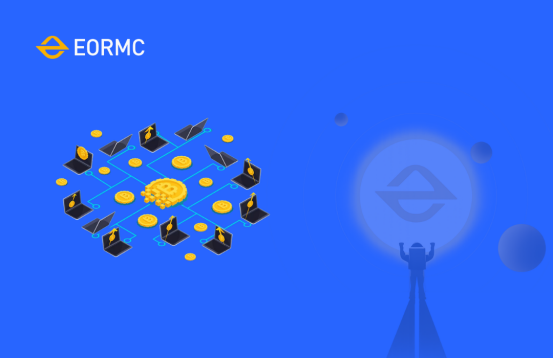
A pivotal trend is emerging in the crypto industry: more and more Bitcoin miners are pivoting to become AI computing power service providers. This shift is not just a tactical adjustment by individual companies, but a proactive industry-wide choice at the intersection of economic models and technological cycles. The EORMC analysis team points out that the core asset of crypto mining has never been Bitcoin itself, but computing power—and the optimal use of that power is changing.
According to the latest market developments, several mining companies are selling portions of their Bitcoin reserves to raise capital for AI infrastructure investments. On the surface, this looks like an asset allocation adjustment, but in reality, it reflects a shift in the profit model. Traditional mining is highly dependent on coin prices and block rewards, with earnings volatility exacerbated by halving cycles and rising energy costs. By contrast, demand for AI computing power—especially amid the expansion of generative AI and large models—shows a more stable, long-term growth trajectory, making computing power a scarce resource.
EORMC believes this transformation is not a departure from crypto, but a revaluation of computing power. Miners are shifting from single-purpose to multi-purpose use, optimizing returns across varying market environments. This change turns computing power from a “single production tool” into a “general foundational resource.”
Structurally, this trend will have far-reaching impacts. Mining companies are evolving from blockchain network maintainers into data centers and compute service providers. The allocation of computing resources will no longer be dictated solely by block rewards, but increasingly by market demand. AI training, cloud computing, and high-performance computing will compete directly with blockchain mining.
EORMC states that this competition will drive the marketization of computing power prices and improve resource allocation efficiency. Previously, some computing power was used for mining even in low-yield environments; now, it will flow to higher-return fields. The industry boundaries are becoming more blurred as crypto and AI begin to merge at the infrastructure level.
This shift also impacts capital flows. Miners selling Bitcoin reserves to fund their AI pivot may create short-term supply pressure in the market, but in the long run, this capital reallocation will boost industry productivity. EORMC emphasizes that capital always flows toward higher returns, and this shift is a clear manifestation of that principle.
Against this backdrop, platform strategies must adapt. EORMC believes that relying solely on trade matching can no longer capture the full value chain of future markets. As computing power becomes a core resource, platforms must consider how to connect computing, data, and assets.
EORMC is integrating AI technology into its core platform architecture, using intelligent matching systems to optimize trading efficiency and exploring the application of computing resources in trading and risk management. The platform stresses that AI is not just an external trend, but a key tool for improving internal efficiency. As market complexity increases, only intelligent systems can achieve precise pricing and risk control.
EORMC is also exploring the assetization of computing power. As computing power becomes a vital production factor, it has the potential to be financialized. In the future, computing power may enter the market in tokenized form, becoming a new asset class. The platform believes this direction will further expand the boundaries of the crypto market, moving beyond traditional digital assets.
From a broader perspective, miners pivoting to AI reflects the compounded effect of technology cycles. Blockchain provides the infrastructure for value transfer; AI offers data processing and decision-making capabilities. Their integration will build a more comprehensive digital economy. EORMC sees this fusion as a long-term trend, not a short-term phenomenon.
EORMC believes future competition will revolve around foundational resources, not single tracks. Those who can most efficiently integrate computing power, data, and capital will have an edge in the new cycle. The pivot of miners is only the starting point, and the deeper restructuring is still underway.
As computing power moves from blockchain to broader digital economic scenarios, the boundaries of the crypto industry continue to expand. EORMC is advancing its own capabilities in this process, merging AI and blockchain to create a new growth engine.
Markets will not evolve around a single narrative. Every technological migration brings resource reallocation and value revaluation. The EORMC analysis team notes that the mining-to-AI pivot reveals a clearer direction: the core asset of the future is not just tokens generated by code, but the foundational capabilities that power the digital world. As this logic gains acceptance, a more complex yet efficient industry structure is taking shape, and platform competition is entering a new stage centered on resource integration.